2026-11-11 ·
Repair or Replace Your Roof in the San Gabriel Valley
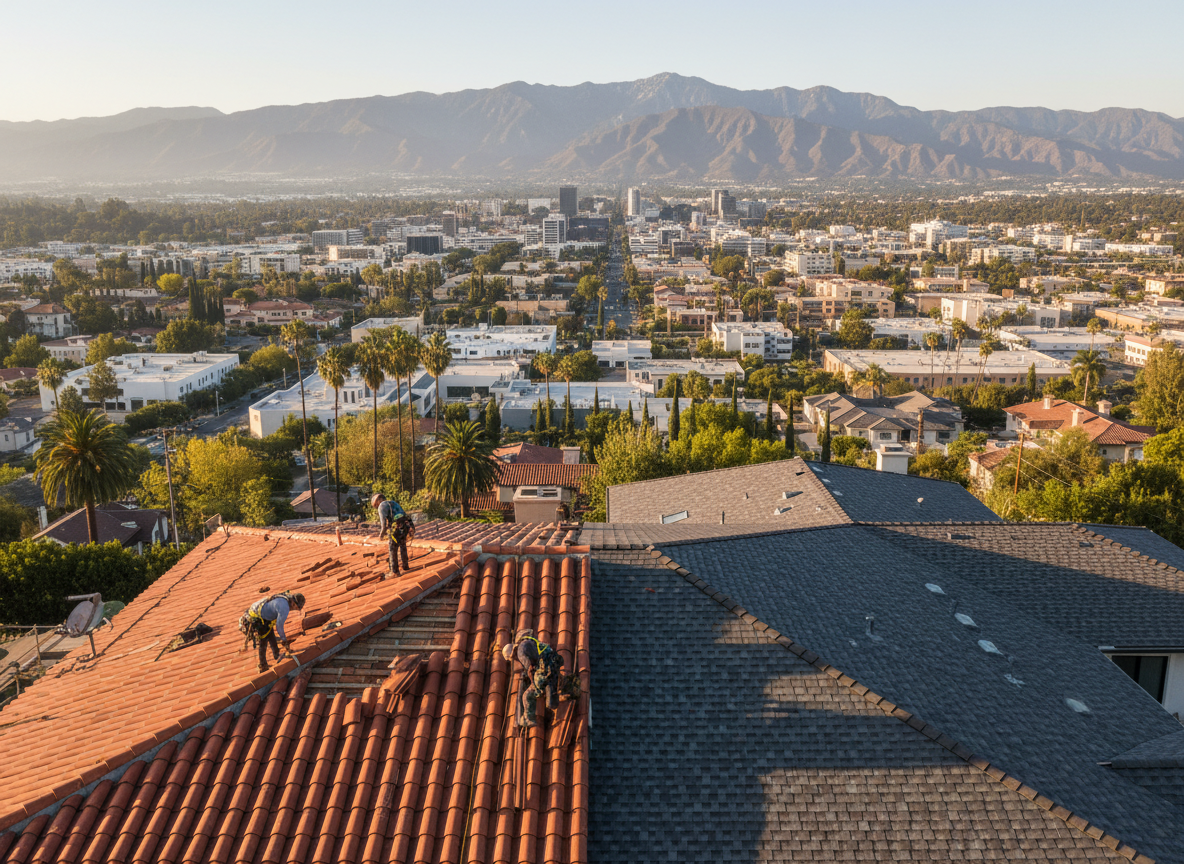
Homeowners in the San Gabriel Valley can often extend roof life through targeted repairs when damage stays localized to a few sections, but replacement is the clearer choice once wear reaches multiple layers or follows widespread exposure to Santa Ana winds, UV, and winter storms.
Assessing Local Weather Impacts
The mild Mediterranean climate brings warm dry summers that intensify UV exposure on roofing materials across neighborhoods like the Playhouse District and South Lake District. Santa Ana winds frequently drive debris and lift edges, while winter storms introduce repeated moisture that finds its way under tiles and flashings. Over time these cycles accelerate wear on homes in Bungalow Heaven and Linda Vista, where older stock meets modern rebuild pressures after the Eaton fire. Checking for lifted tiles, granule loss in gutters, and daylight visible from the attic helps separate isolated problems from broader failure. Early attention in these conditions often keeps repairs viable longer than in harsher climates.
When Repair Addresses the Problem
Localized leaks around penetrations or single slope sections respond well to repair when the surrounding roof remains sound. Roof leak repair focuses on replacing damaged underlayment and resealing flashings without disturbing intact areas. In Old Pasadena and near Pasadena City Hall, many homes show isolated wind damage that fits this pattern after one strong Santa Ana event. Homeowners can inspect accessible areas for cracked tiles, rusted valleys, and sealant failure around vents. When these issues appear in one or two zones and the roof has not reached the end of its expected service span, repair restores function without the disruption of a full tear-off.
When Replacement Becomes Necessary
Replacement enters the picture once multiple layers exist, widespread granule loss appears, or fire-related charring affects structural elements. Roof replacement removes old materials down to the deck and installs new underlayment suited to ongoing UV and wind loads. Areas recovering from the Eaton fire, including parts of Altadena and Pasadena, often reach this stage when char patterns or water intrusion from lost roofing coincide with pre-existing age. Homes near Caltech or the Rose Bowl that have already undergone one prior repair cycle commonly cross this threshold. The decision rests on counting layers, mapping moisture stains across the attic, and noting sagging deck sections rather than on any single visible spot.
Practical Homeowner Checks
Walk the perimeter and note missing or cracked tiles, paying special attention to north-facing slopes that retain more moisture after winter storms. From inside the attic, shine a light along the underside to locate pinpoints of daylight or dark staining along rafters. Record the age of the home and any prior work visible from Colorado Boulevard or near the Huntington Library to gauge remaining life. Compare findings against recent Santa Ana events or nearby wildfire rebuild activity. These observations guide whether a focused repair will suffice or whether the entire assembly needs renewal to handle continued exposure.
Continuing the Decision Process
After completing the checks, compare the extent of damage against the roof's overall condition and the home's location in the San Gabriel Valley. Properties in Linda Vista or near Pasadena City Hall that show concentrated issues may stay on the repair path, while those with widespread wear or post-Eaton fire exposure typically move toward replacement. Re-roofing after the Eaton fire outlines additional considerations for affected blocks. Reviewing findings with a local crew familiar with tile systems and wind patterns supplies the final clarity needed before scheduling work.