2026-11-11 ·
Flat Roof Problems in Southern California Homes
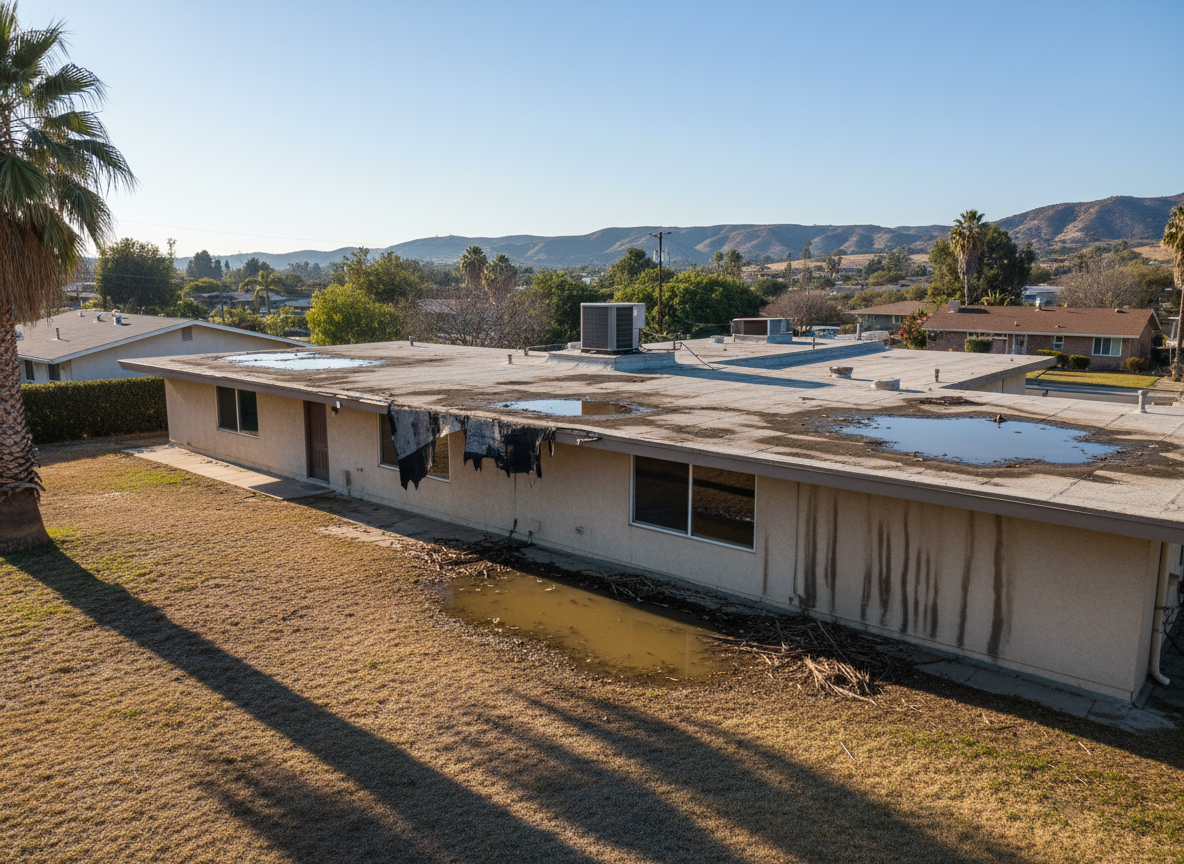
Flat roofs in Southern California homes commonly develop membrane splits from prolonged UV exposure, standing water after winter storms, and seam failures during Santa Ana wind events, especially in neighborhoods such as Old Pasadena, the Playhouse District, and Bungalow Heaven.
UV Radiation and Membrane Breakdown
Southern California's mild Mediterranean climate brings warm, dry summers that deliver intense sunlight year after year. This constant exposure causes modified bitumen and single-ply membranes on flat roofs to lose elasticity and develop surface cracking. Over time the top layer chalks and thins, allowing small fissures to widen into active leak paths. In Pasadena and Altadena, where many flat-roof homes sit near the foothills, afternoon sun angles accelerate this aging on south-facing sections. Homeowners can inspect by walking the roof at midday and noting any areas where the surface feels brittle or shows exposed reinforcement fabric. These conditions often appear first around penetrations such as HVAC curbs and skylight bases.
Ponding Water After Winter Storms
Winter storms bring concentrated rainfall that flat roofs must shed quickly through drains and scuppers. When sediment, leaves, or shifted gravel block these outlets, water remains in low spots for days. Prolonged ponding softens insulation below the membrane and promotes blistering as trapped moisture expands under heat. In the San Gabriel Valley, older flat roofs near Colorado Boulevard and Pasadena City Hall frequently show this pattern because original drainage slopes were modest. A practical check involves marking pond locations with chalk after a rain and returning 48 hours later to see which areas still hold water. Clearing debris from drains before storm season reduces the duration of standing water and limits secondary damage to the deck.
Santa Ana Wind Uplift and Seam Separation
Santa Ana winds create strong negative pressure that can lift poorly adhered sections of flat roofing. Ballasted systems lose gravel coverage while mechanically fastened membranes experience fastener pull-out at the perimeter. Once seams separate, wind-driven rain enters during the next storm. Homes in Linda Vista and South Lake District often face this because open exposures allow winds to accelerate across the roof plane. Regular checks include examining flashing at parapet walls and confirming that termination bars remain tight against the vertical surface. Wind events also dislodge rooftop equipment, creating new puncture points that require prompt attention.
Post-Fire Rebuild Considerations in Eaton-Affected Areas
Rebuilding after the Eaton fire has introduced new flat roof assemblies alongside older structures in Altadena and Pasadena. Transition areas where new membrane meets existing roofing create potential weak points if slopes and drainage are not matched. Homeowners can review the re-roofing after the Eaton fire article for guidance on coordinating flat sections with surrounding slopes. Checking that new drains align with existing ones and that cricket slopes divert water away from walls helps prevent the same ponding issues seen on pre-fire roofs.
When to Schedule Flat Roof Repair
Persistent interior stains, recurring blistering, or visible seam lifting indicate the need for targeted intervention rather than full replacement. Flat roof repair addresses isolated membrane damage and drainage corrections while preserving sound sections of the existing system. In the San Gabriel Valley, many homeowners consult the repair or replace guide to weigh localized fixes against broader work when multiple problem areas appear. Routine seasonal inspections remain the most direct way to catch these issues before they affect interior finishes.