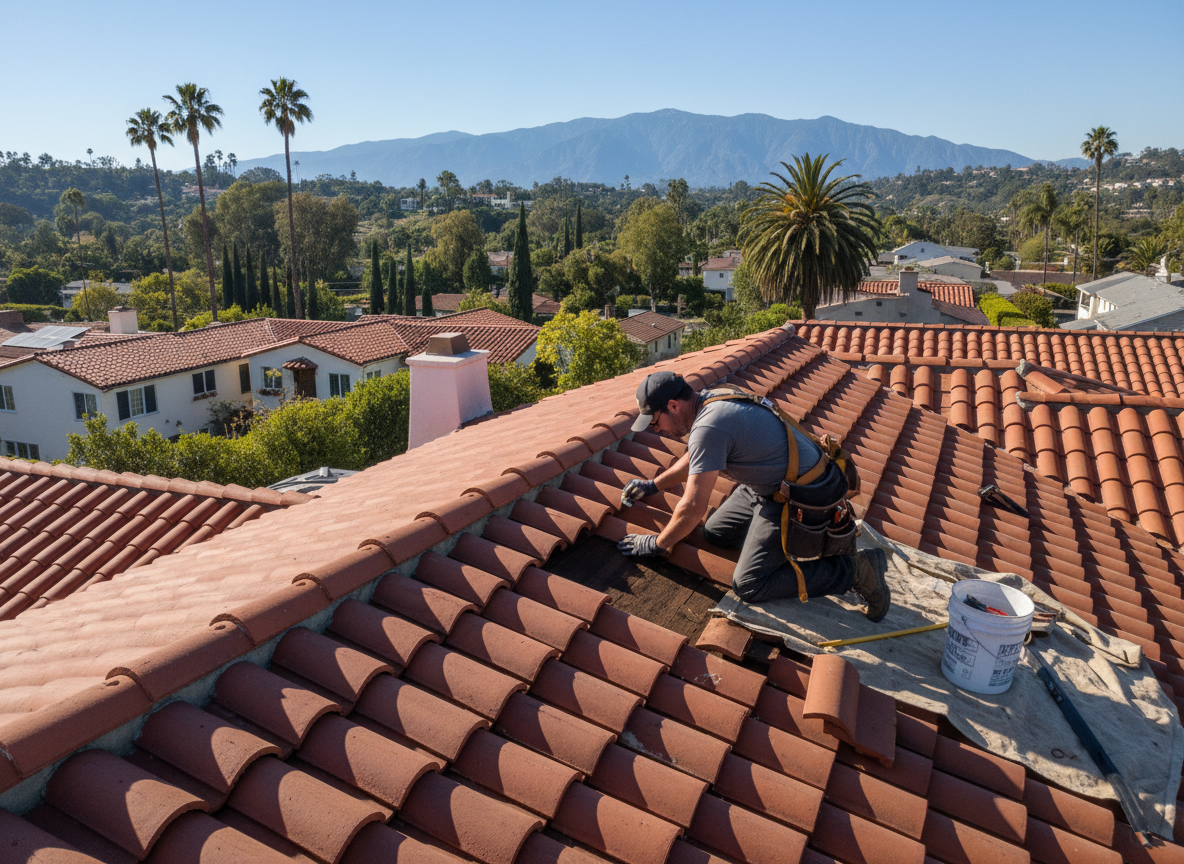
Clay tile roofs in neighborhoods like Bungalow Heaven and Linda Vista often develop leaks when individual tiles crack or slip out of place, exposing the underlayment beneath. Failed flashing around chimneys, valleys and wall intersections lets water enter during winter atmospheric-river storms, while UV exposure and heat in the mild Mediterranean climate dry out the felt or synthetic layers over time. Wildfire ash and ember exposure in the Eaton fire rebuild area adds another layer of wear on older roofs in Altadena and Pasadena.
We begin every job with a hands-on inspection that checks ridge caps, drip edge, fascia boards and all roof penetrations including vents and skylights for signs of separation or rot. When decking damage is found we remove the affected section, replace the compromised underlayment and reinstall matching tile or torch-down material so the repair blends with the existing roof. In areas with ponding water we add tapered cricket details and improve drainage before sealing the surface.
Santa Ana winds lift shingles and loosen valley metal across the San Gabriel Valley while summer heat accelerates underlayment breakdown in places like Arcadia and Glendale. Winter storms push water under cracked concrete tile in Camarillo and Simi Valley, and the same pattern appears on torch-down and modified bitumen roofs in Burbank and El Monte. Addressing these climate-driven failures requires matching the repair method to the specific roof type and local exposure conditions.
Technician insight
In Pasadena the thing that catches most people out with roof leak repair is the original underlayment in 1920s bungalows around Bungalow Heaven and the Playhouse District. Once the felt dries from decades of UV and heat it loses its ability to shed water from winter atmospheric-river storms, so a single slipped tile can send water straight to the decking.
Valley Metal Separation in Old Pasadena
Water was entering along a valley on a 1928 home where the metal had pulled away from the tile. Inspection showed the underlayment beneath had deteriorated from years of sun exposure. We replaced the damaged section of underlayment, reinstalled new valley metal and matched the surrounding clay tile. The homeowner reported no further moisture in the attic after the next rain.
Roof Leak Repair Services We Offer
✓Clay Tile Leak Repair
Replaces cracked or slipped clay tiles and restores the underlying felt or synthetic membrane so water no longer reaches the decking.
✓Flashing and Valley Metal Repair
Reseals or replaces deteriorated flashing around chimneys, valleys and wall intersections to stop water entry at these common failure points.
✓Skylight and Vent Leak Repair
Removes old sealant, installs new flashing kits and ensures roof penetrations remain watertight after seasonal movement or wind exposure.
✓Underlayment Replacement
Removes dried or water-damaged underlayment sections and installs new material rated for the local UV and heat conditions before reinstalling tile.
✓Storm Damage Assessment and Tarping
Secures temporary protection after high-wind or heavy-rain events and performs permanent repairs once the roof can be safely accessed.
How it works
- 1
Site Inspection
We walk the roof and attic to map every active leak, check tile condition, flashing integrity and underlayment exposure.
- 2
Damage Documentation
Photographs and notes identify the exact failure points so the repair plan matches the roof type and local climate stresses.
- 3
Targeted Repair
We replace or reseal only the affected areas using matching materials for tile, flashing or membrane sections.
- 4
Final Water Test
A controlled water test confirms the repair holds before we leave the site.
Pricing
The cost of roof leak repair depends on roof type, access and damage.